Diagnostic classification
models
A brief introduction
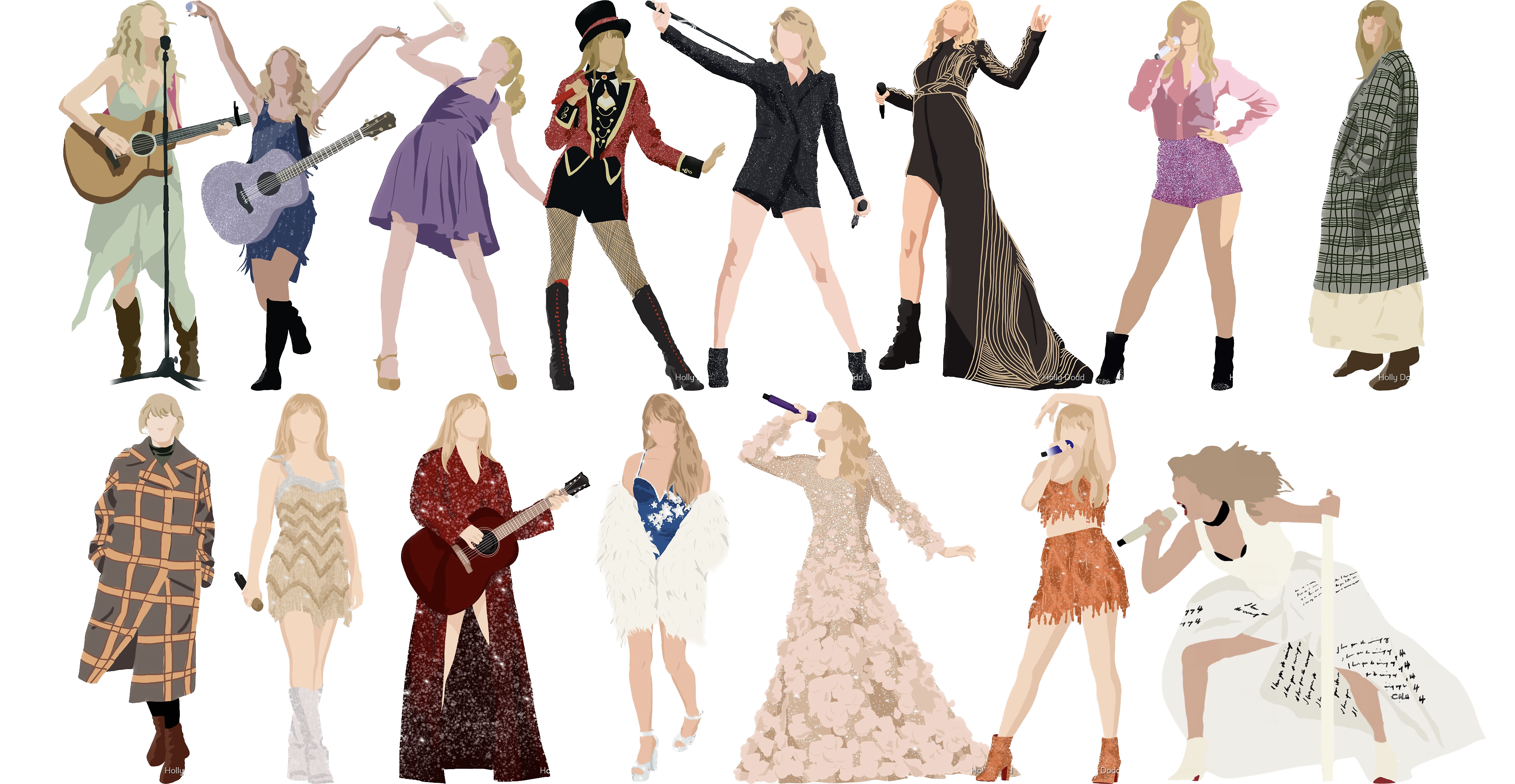
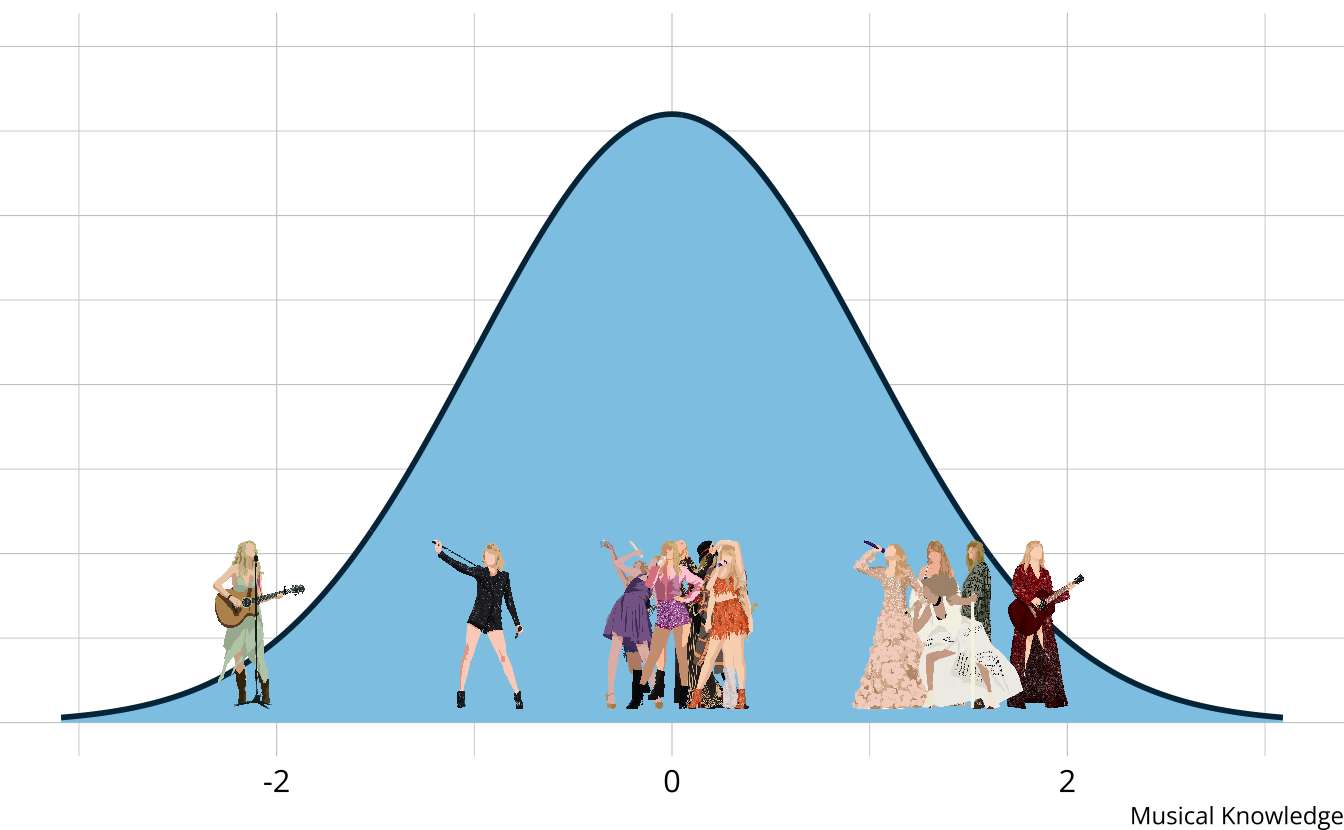
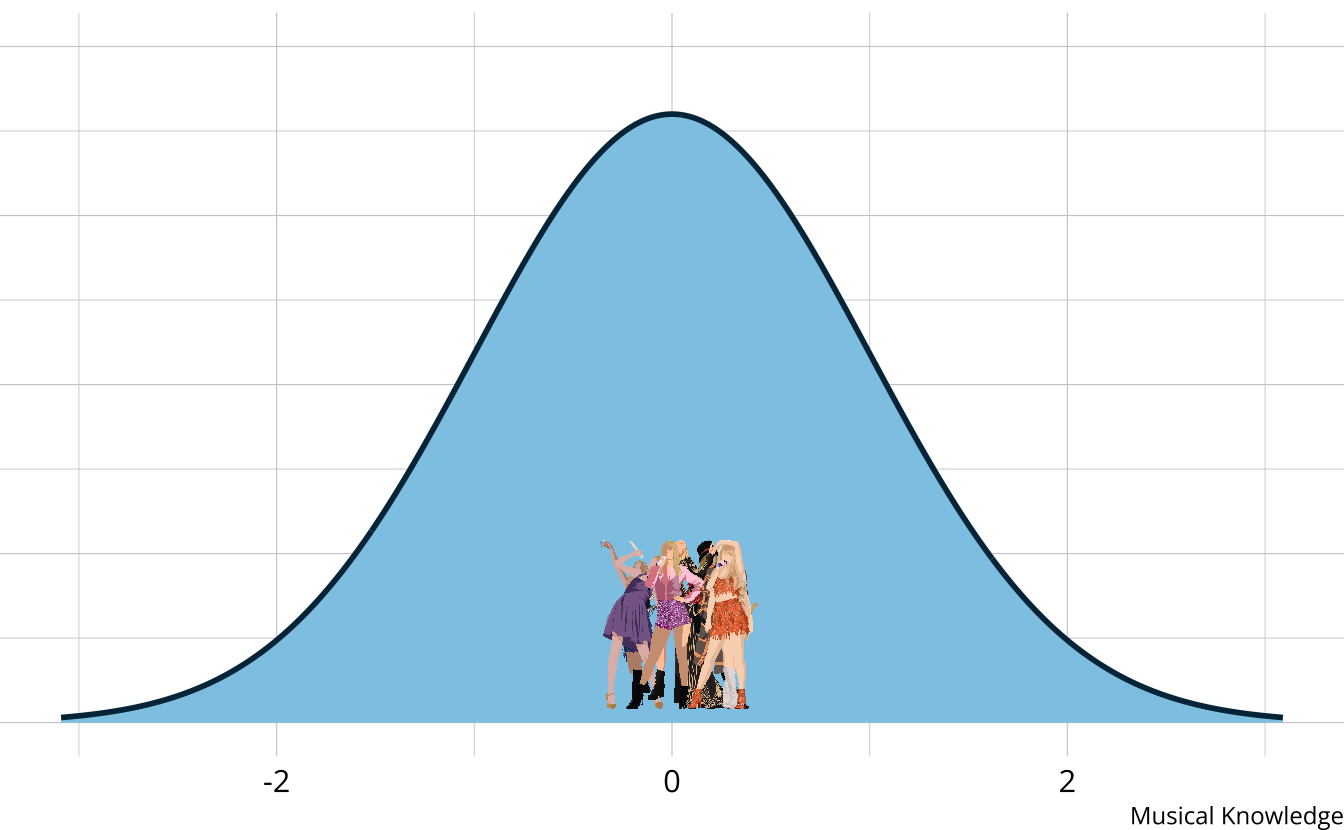
- The output is a weak ordering due to error in estimates
- Confident Taylor Swift (debut) is the worst
- Not confident on ordering toward the middle of the distribution
- Limited in the types of questions that can be answered.
- Why is Taylor Swift (debut) so low?
- What aspects do each era demonstrate proficiency or competency of?
- How much skill is “enough” to be competent?
Diagnostic music assessment
- Rather than measuring overall musical knowledge, we can break music down into set of skills or attributes
- Songwriting
- Production
- Vocals
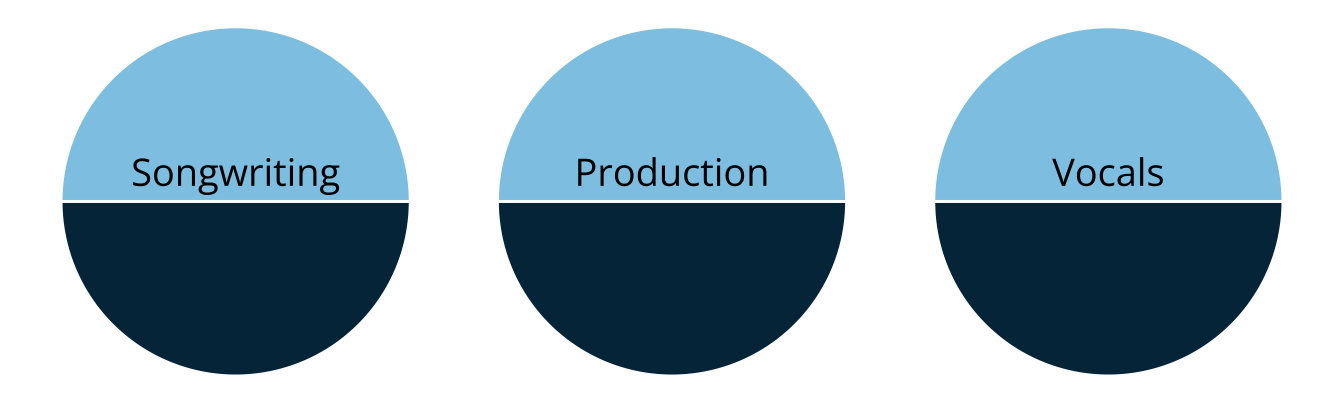
- Attributes are categorical, often dichotomous (e.g., proficient vs. non-proficient)
Diagnostic classification models
- DCMs place individuals into groups according to proficiency of multiple attributes
| songwriting | production | vocals | |
|---|---|---|---|
 |
|||
 |
|||
 |
|||
 |
Benefits of DCMs
- Fine-grained, multidimensional results. Answer more questions:
- Why is Taylor Swift (debut) so low?
- Subpar songwriting, production, and vocals
- What aspects are albums competent/proficient in?
- DCMs provide classifications directly
- Why is Taylor Swift (debut) so low?
- High reliability with fewer items
- Less information need to classify than to place precisely along a scale
| songwriting | production | vocals | |
|---|---|---|---|
|
|||
|
|||
|
|||
|
Results from DCM-based assessments
| songwriting | production | vocals | |
|---|---|---|---|
|
|||
 |
|||
 |
|||
 |
|||
|
|||
|
|||
 |
|||
|
|||
 |
|||
 |
|||
 |
|||
 |
|||
 |
|||
 |
|||
 |
- No scale, no overall “ability”
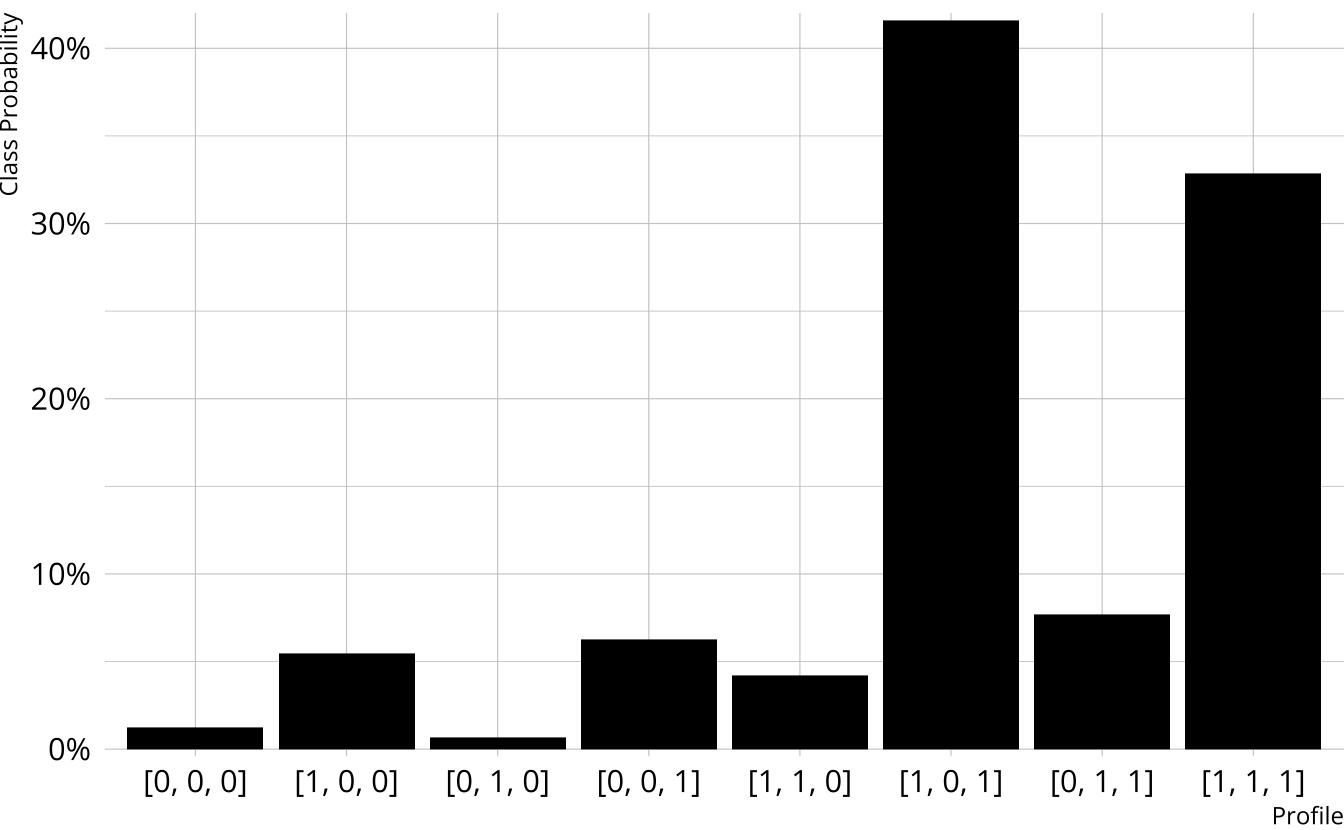
- Students are probabilistically placed into classes
- Classes are represented by skill profiles
- Feedback on specific skills as defined by the cognitive theory and test design
Fine-grained feedback
- Distinguish between respondents who may have similar scale scores
| songwriting | production | vocals | |
|---|---|---|---|
|
|||
|
|||
|
|||
|
|||
|
|||
|
|||
|
|||
|
Classification reliability
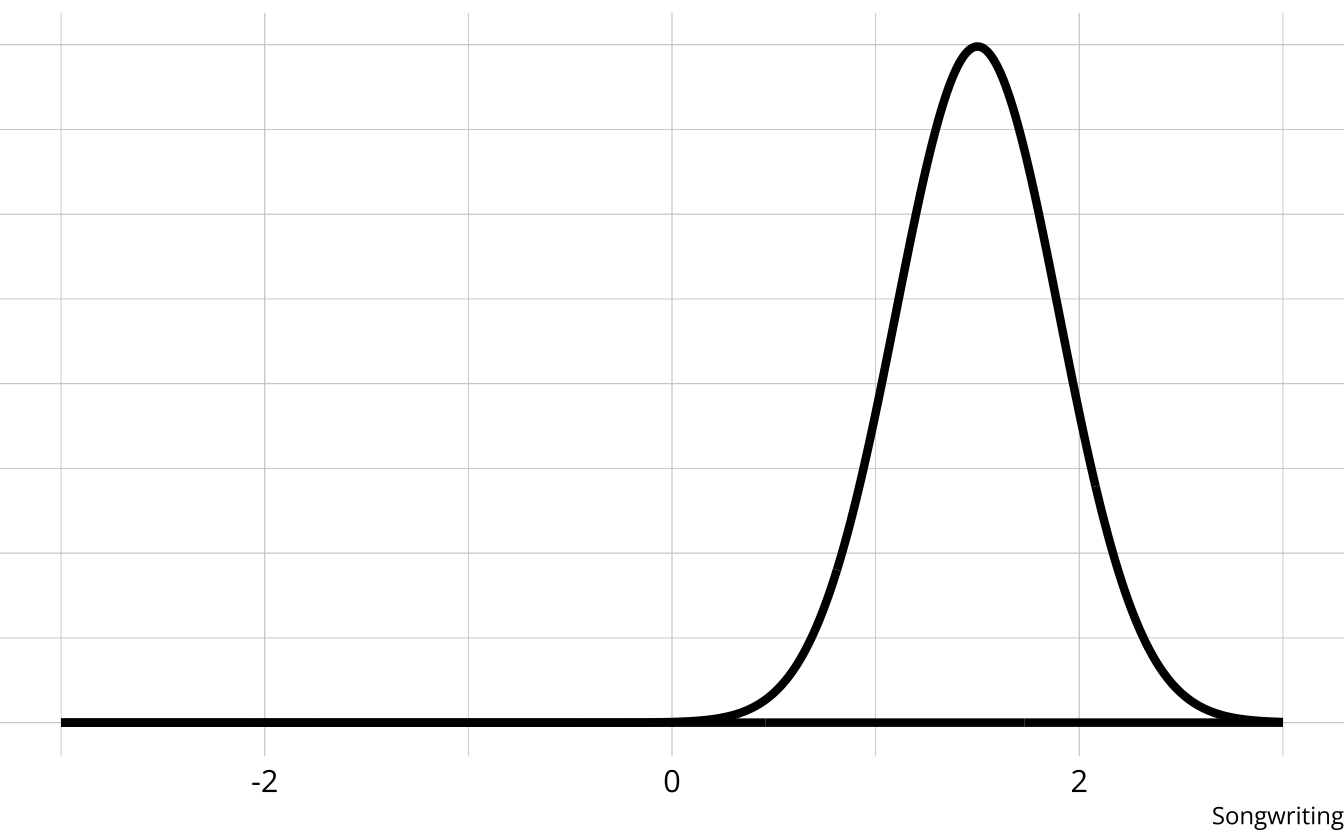
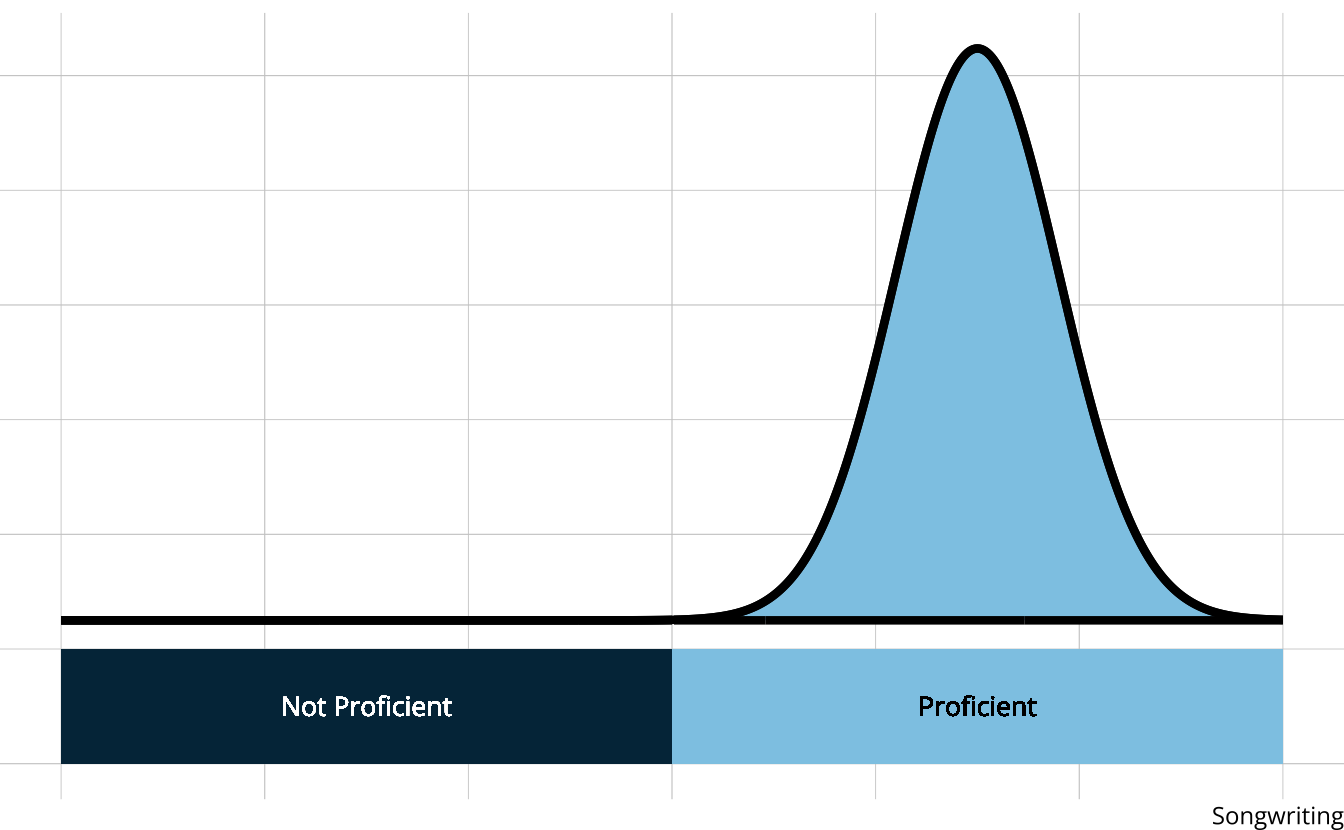
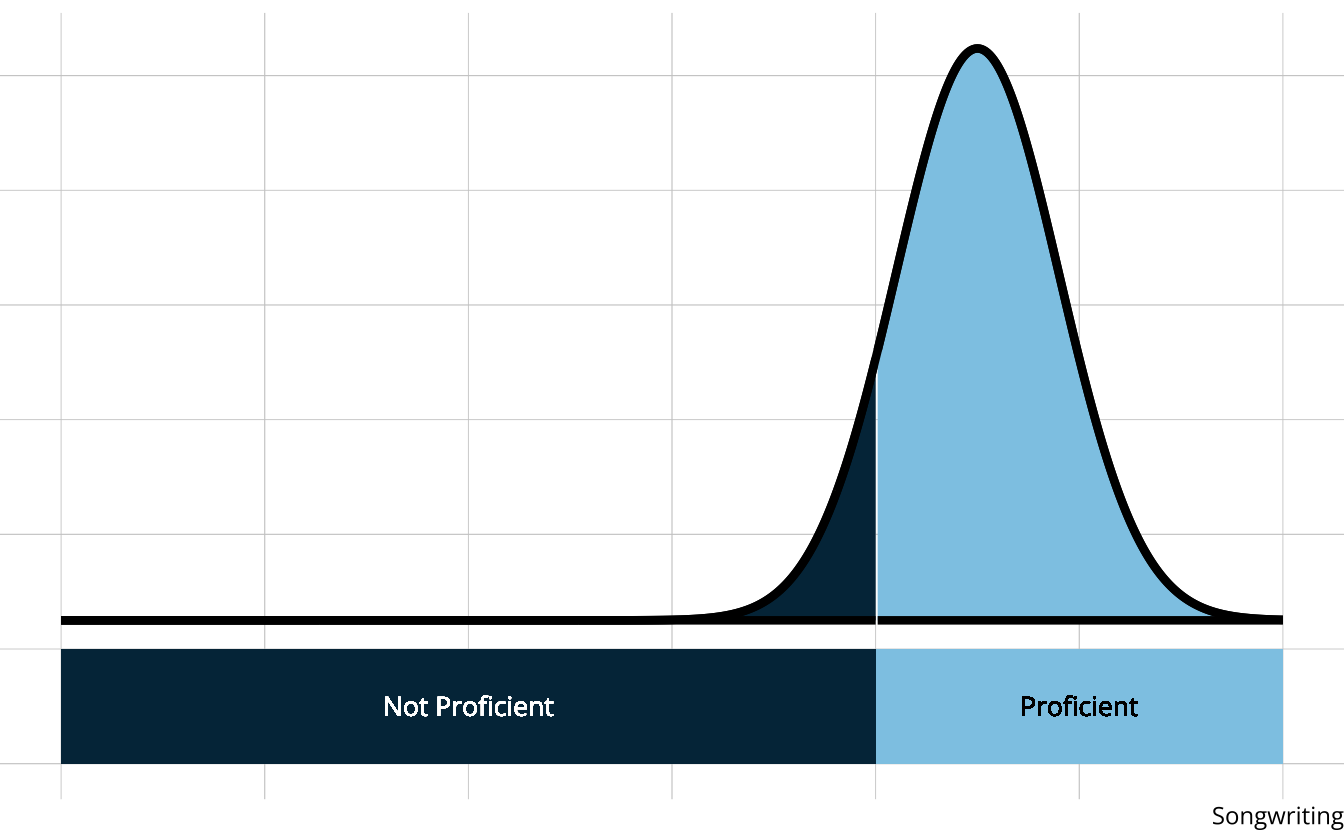
- Easier to categorize than place along a continuum
- Can set a proficiency threshold to optimize Type 1 or Type 2 errors
When are DCMs not appropriate?
When the goal is to place individuals on a scale
DCMs do not distinguish within classes
| songwriting | production | vocals | |
|---|---|---|---|
|
|||
|
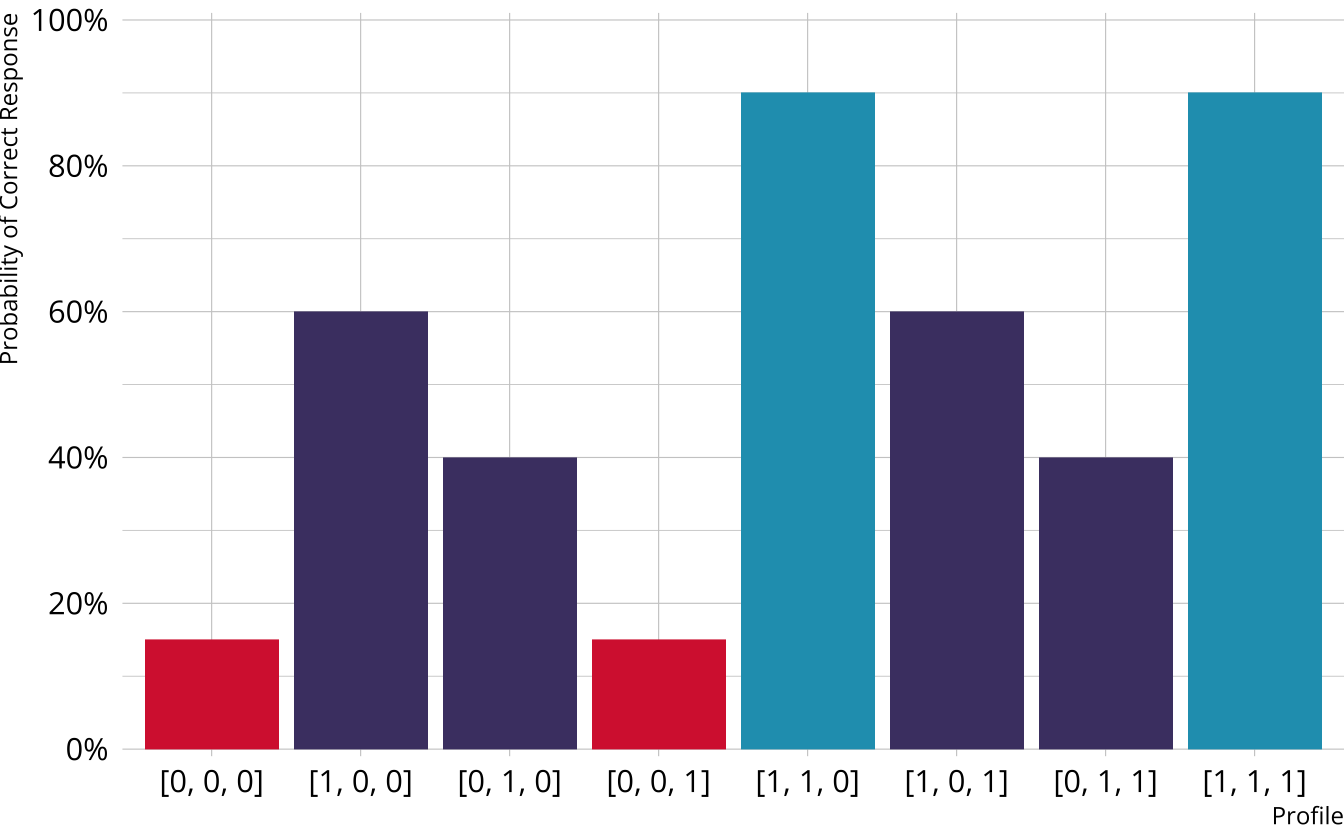
Loglinear cognitive diagnostic model (LCDM)
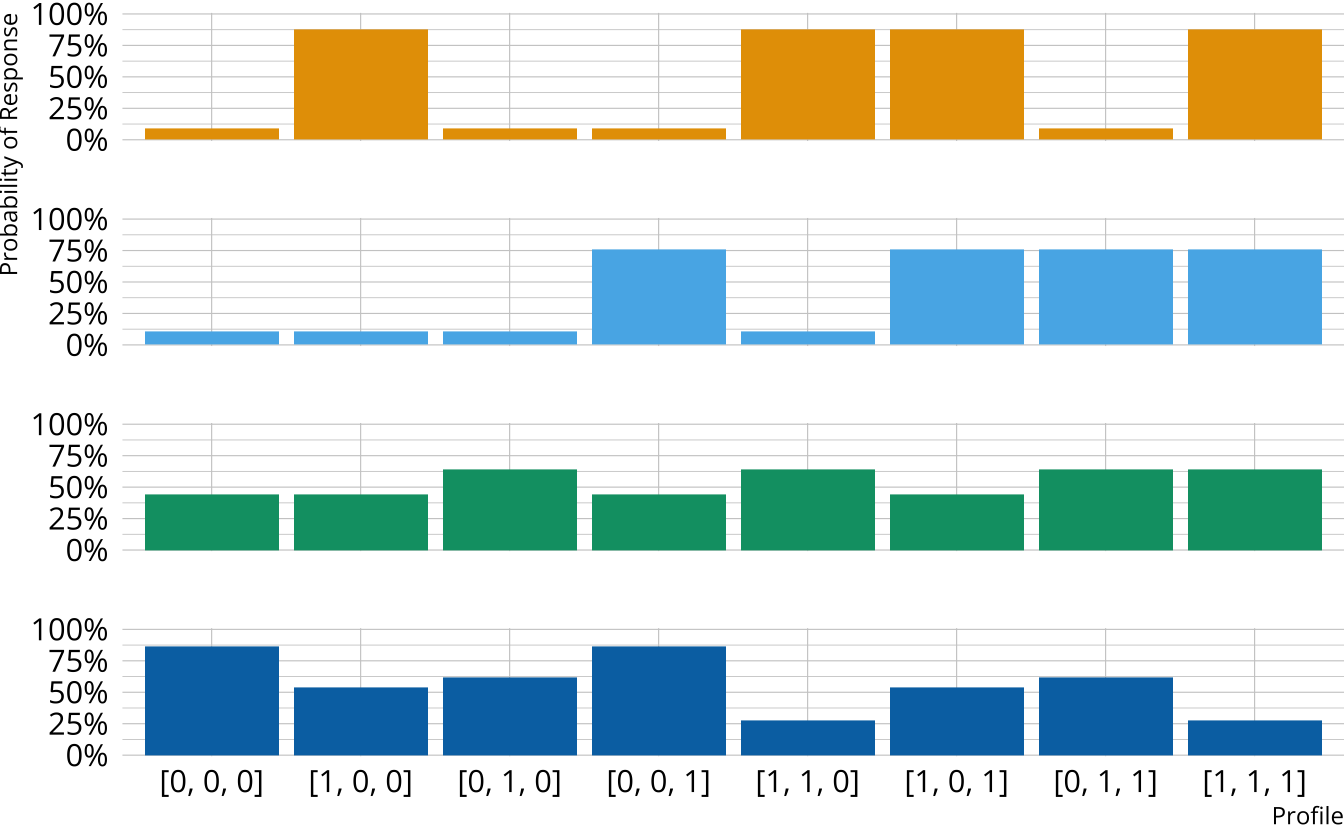
Different response probabilities for each class (partially compensatory)
This will be our focus
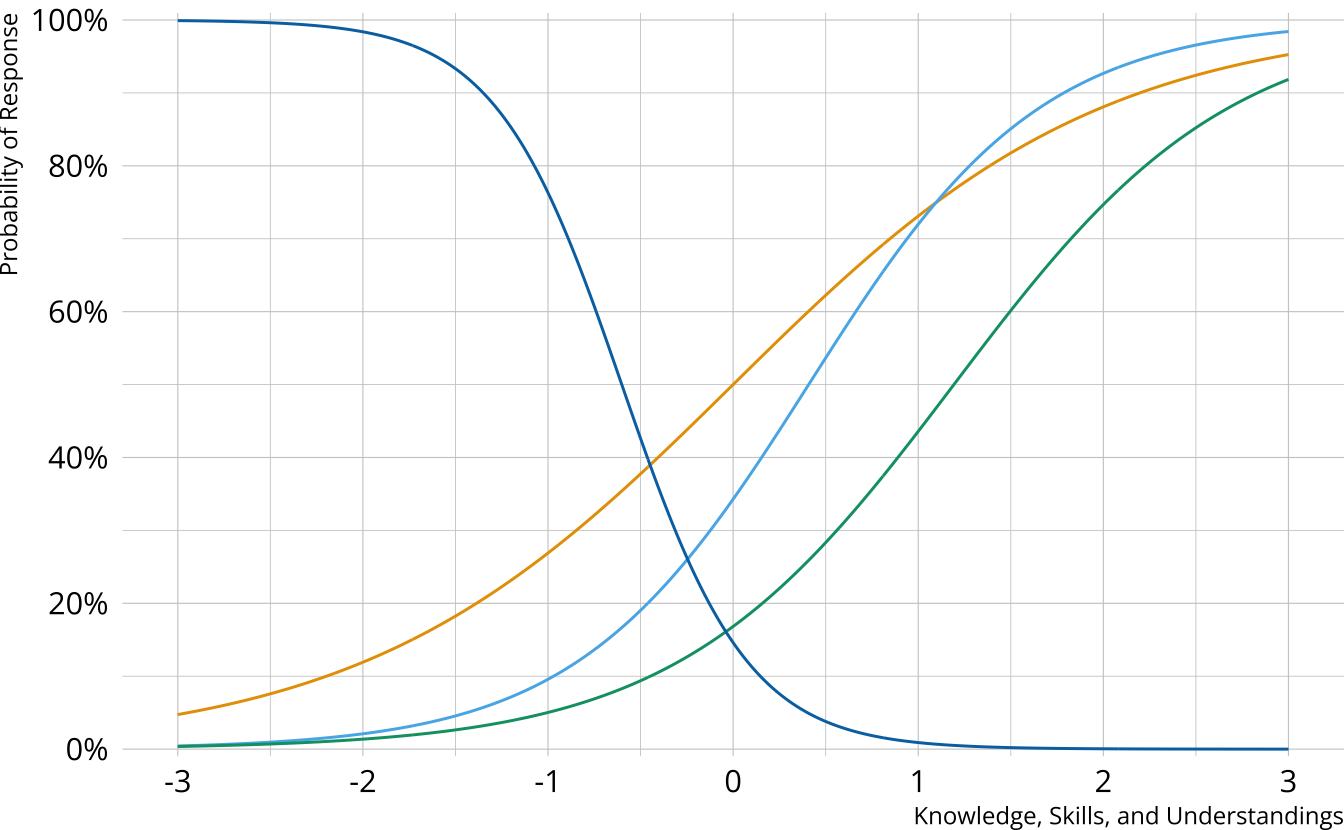
IRT respondent estimates
-
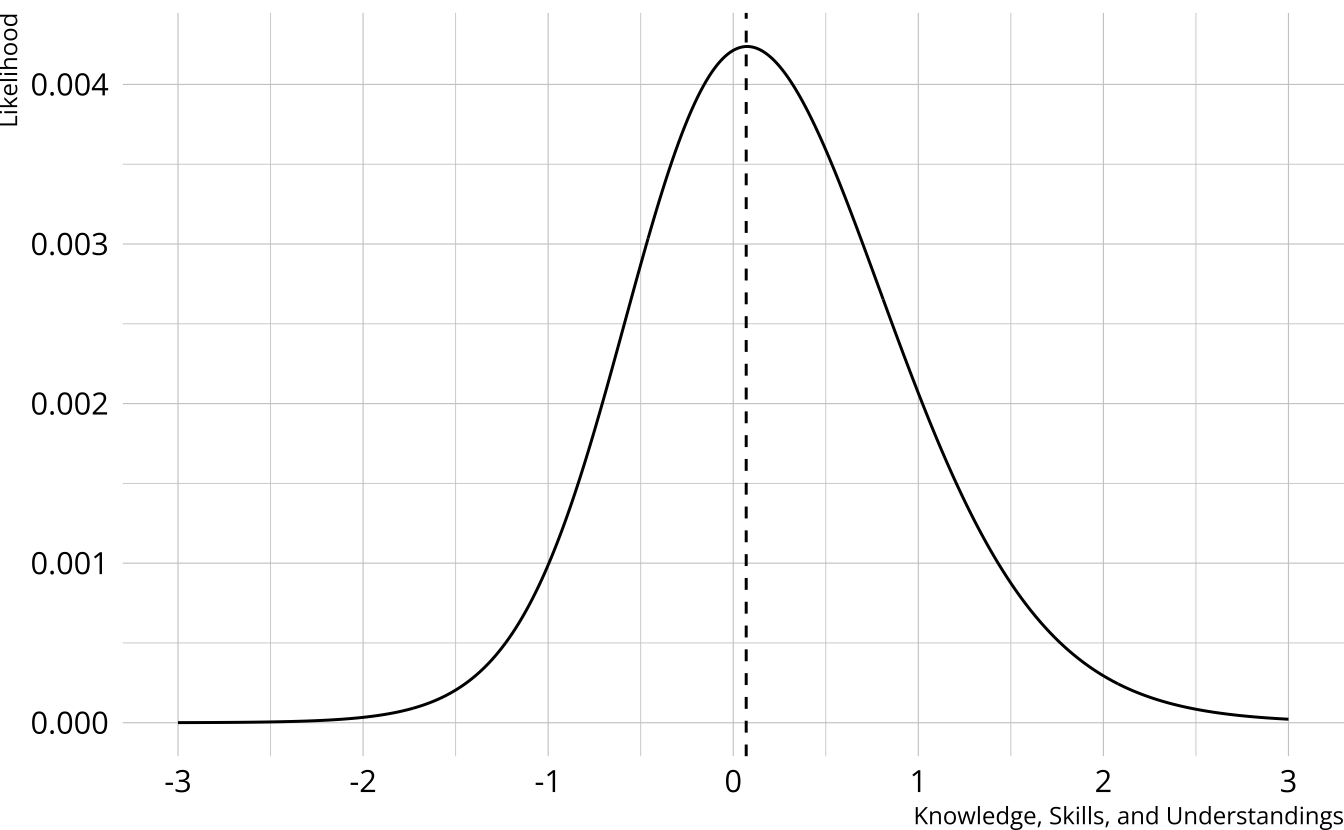
Multiply the ICCs together
- Multiply the response probabilities together for each value of the trait
Student estimate is the peak of the curve
Spread of the curve represents uncertainty in estimate
DCM respondent estimates
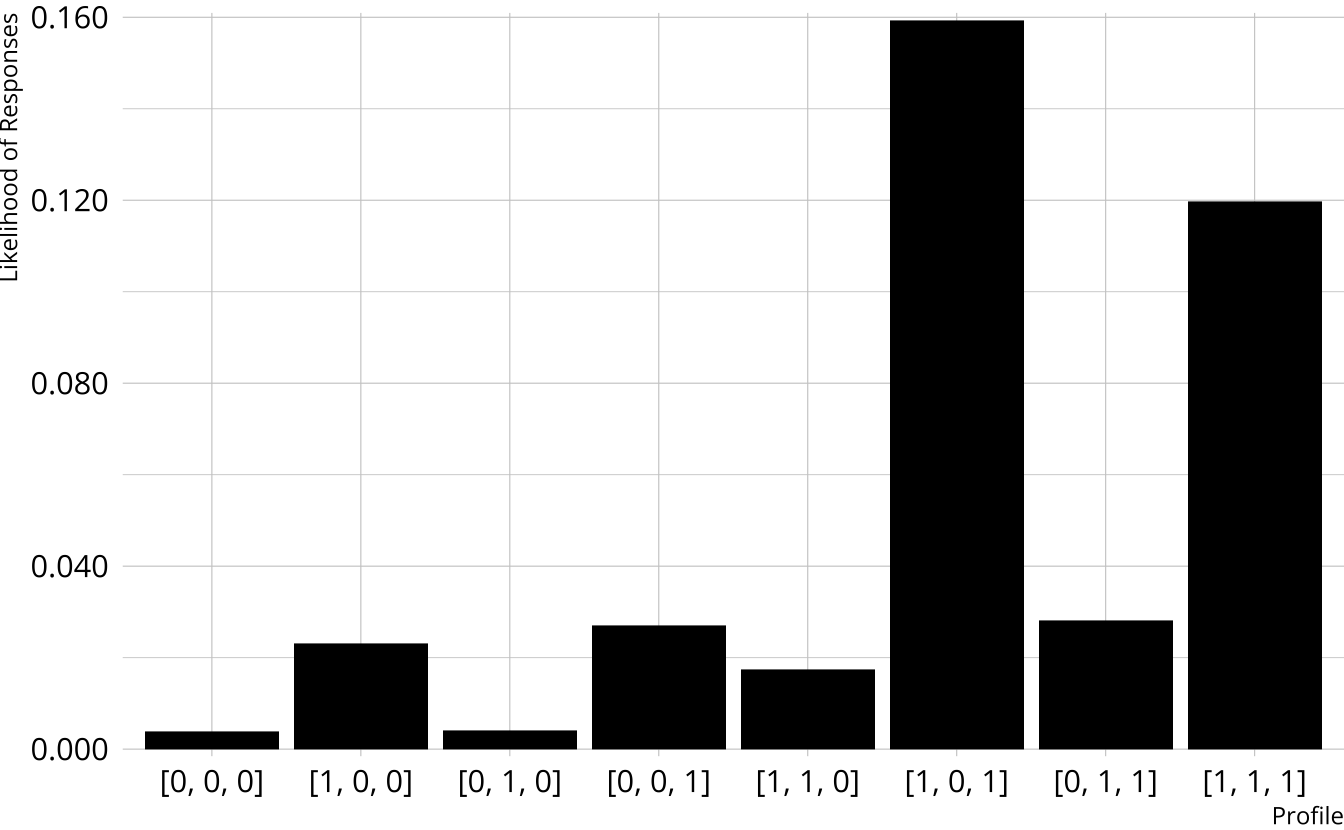
- Multiply the response probabilities together for each class
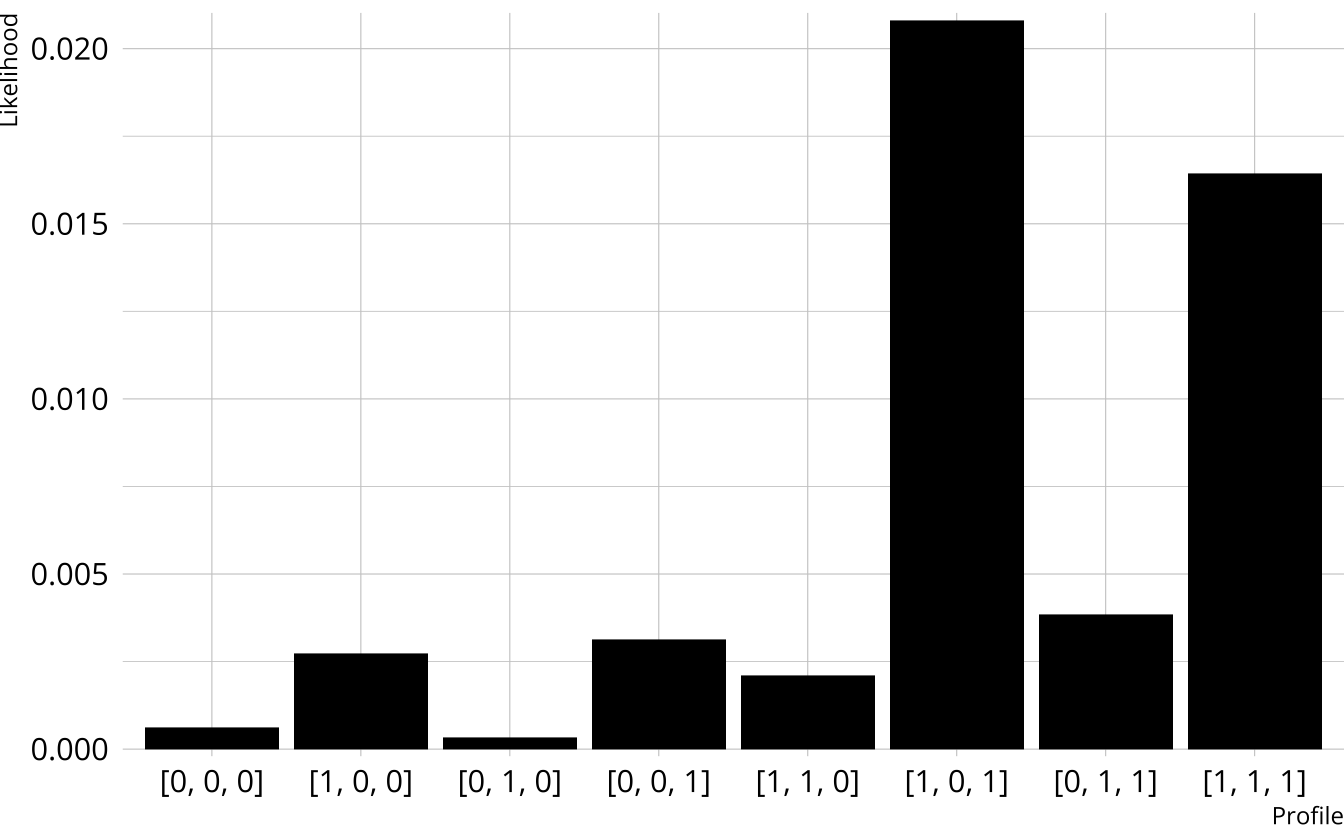
- Multiply the item response likelihoods by structural parameters
- Class probabilities are the class likelihoods divided by the total likelihood